
Master of Business Administration (MBA)
Flexible Evening MBA for Working Professionals in San Diego
The Master of Business Administration (MBA) at San Diego State University is designed for working professionals who want to move into management or leadership roles, increase their responsibility at work, or transition into new areas of business.
SDSU’s MBA program combines flexible evening courses with applied learning, employer engagement, and strong industry connections across San Diego and California. Students develop practical business skills in finance, marketing, operations, analytics, and strategy while continuing to build professional experience throughout the program.
Students complete coursework in the evening, collaborate on real-world business projects, and apply classroom learning directly to workplace challenges.
Program Snapshot
- Afternoon and evening classes designed for flexibility
- Continue working while earning your degree
- Applied learning through real-world business projects
- MBA electives aligned with career goals and interests
- Strong employer connections across San Diego and California
- Opportunities to build leadership, communication, and analytical skills
- Collaborative learning environment with experienced professionals
The SDSU MBA offers two program formats designed to support different professional goals and schedules.MBA Program Formats

Flexible MBA
Students can choose to be a full-time or part-time student based on their work schedule. Can be completed within 18 months to 3 years.
Sports MBA
A full-time program with a set cohort, can be completed within 16 months.
What Makes SDSU's MBA Different
Built for Flexibility
The MBA schedule is designed to support professionals balancing career growth, coursework, and personal responsibilities. Whether you are just starting your career or pivoting to a new role, we meet you where you are.


Strong Connections to San Diego Industries
Students benefit from SDSU’s relationships with employers and industries across San Diego and California, including technology, healthcare, defense, finance, consulting, hospitality, and entrepreneurship.
Applied Learning Environment
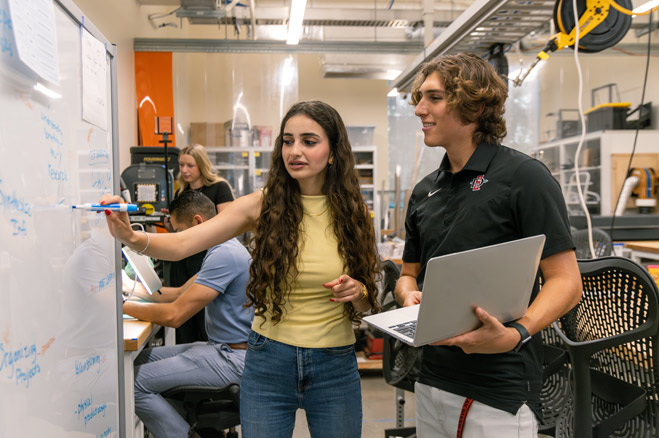
Students apply concepts through projects, case work, presentations, and collaborative business problem-solving experiences connected to real organizational challenges.

Career and Professional Development
Students build professional networks through classmates, alumni, employer engagement, faculty connections, and career development opportunities throughout the program.
Public University Value
Ranked No. 32 among public university part-time MBA programs by U.S. News & World Report, SDSU's Fowler College of Business offers the resources and reputation of a major public university, combined with strong employer partnerships and hands-on learning opportunities, all at a tuition cost that is significantly more affordable than many competing MBA programs.

Who Should Consider the SDSU MBA?
The SDSU MBA is designed for professionals who want to:
- Move into leadership or management roles
- Increase responsibility within their organization
- Build broader business and analytical skills
- Transition into new business functions or industries
- Strengthen the communication, collaboration, and critical thinking skills that will set you apart in the age of AI
Students come from a wide range of professional and academic backgrounds, creating a collaborative environment that reflects real-world business settings.
What You'll Learn
The MBA curriculum emphasizes leadership, communication, analytical thinking, strategic decision-making, and cross-functional collaboration across business disciplines.
Graduates develop the ability to:
- Speak the language of business, across functions
- Lead teams and manage projects
- Make data-driven business decisions
- Analyze financial and operational performance
- Develop marketing and business strategies
- Communicate across teams and organizations
- Solve business problems collaboratively
- Navigate organizational change and leadership challenges
Students apply these skills through group projects, case studies, presentations, and applied business experiences.
Career Outcomes
The SDSU MBA prepares students for leadership and management opportunities across industries including technology, healthcare, finance, consulting, defense, government, hospitality, and entrepreneurship. Students benefit from a dedicated career services center and team that provides personalized career coaching and 1-on-1 support. Graduates build careers across San Diego County, California, and national business markets through employer engagement, applied learning experiences, networking opportunities, and professional development support throughout the program.
Employment Outcomes

Accepted employment within six months of graduation

Average base salary
Where Our MBA Graduates Succeed
These outcomes highlight our strong connections to regional employers and dedicated career support, helping students launch and advance careers as program managers, directors, business analysts, financial analysts, project managers, consultants, operations managers, and other business leaders in San Diego and beyond.
Business Administration Curriculum
The MBA curriculum progresses from foundational business knowledge to advanced applied business experience.
Develop core business knowledge in accounting, economics, statistics, and quantitative analysis. Learn the language of business through the Foundational Core classes.
Build advanced capabilities in leadership, strategy, finance, operations, marketing, and organizational management. Build your Executive Presence.
- BA 670 Managerial Accounting (3 units)
- BA 671 Legal Environment of Business (2 units)
- BA 672 Managerial Marketing (3 units)
- BA 673 Organization Behavior and Leadership (3 units)
- BA 674 Financial Management (3 units)
- BA 649 Business Analytics (3 units)
- BA 676 Strategic Thinking (3 units)
- BA 600 Contemporary Executive Toolkit (3 units)
Professional core courses may not be waived.
Customize the MBA experience based on career goals and professional interests.
All students are required to complete no fewer than 9 elective units.
- Electives can be taken from any ACCTG, FIN, MGT, MIS, and MKTG graduate class.
- Up to six units in BA 780, Field Studies in Business and BA 798, Special Studies.
- Up to six units of 500 level coursework can be included.
- Up to six units can be taken from outside of the Fowler College of Business upon approval by the director of graduate business programs.
Below are suggestions for elective selection but are not all-encompassing. Students may choose to specialize in a specific area of study, and it is encouraged during the 2nd and 3rd semester of their program. Specializations require a minimum of 12 units (four classes) in their chosen area of emphasis. Students may specialize in only one area of study. To officially add a specialization, a student must first complete the Request for Specialization form before beginning to work on the electives in their concentrated area.
For a listing of the specific courses recommended for each of the specializations and career electives, please select a subject below.
Optional MBA Specializations
The MBA in Finance Specialization provides students with an academic curriculum that focuses on Finance
Choose Four (12 units)
- FIN 522: Individual Insurance Management
- FIN 585: Estate Planning Issues and Practice
- FIN 589: Personal Financial Planning
- FIN 590: Personal Financial Planning Practicum
- FIN 617: Financial Management II
- FIN 641: Financing the Emerging Enterprise
- FIN 651: Seminar in Investments
- FIN 652: Seminar in Security Analysis and Portfolio Management
- FIN 653: Case Studies in Financial Management
- FIN 654: Seminar in International Business Finance (Summer)
- FIN 659: Decision Making in the World Economy
- ACCTG 620: Financial Measurement and Reporting
- ACCTG 663: Financial Statement Analysis
The MBA in Health Services Administration is designed to give students the opportunity to integrate the knowledge they gain in earning their MBA with 12 units of coursework in Public Health. This knowledge helps to prepare students to work in various healthcare administration positions within the healthcare field.
Required (3 units)
- PH 605 – Health Services Administration (3)
Choose Three (9 units)
- PH 642 Health Insurance and Financing Systems (3)
- PH 644A Health Services Organization and Management (3)
- PH 644B Managing the High Performing Health Care Organization (3)
- PH 645 Health Economics (3)
- PH 647 Quantitative Methods and Health Data Analysis (3)
- PH 648 Health Policy (3)
- PH 742A Health Services Financial Management (3)
- PH 747 Quality Improvement and Program Evaluation (3)
- PH 748 Health Services Competitive Strategy and Marketing (3)
The MBA in Information Systems specialization provides students with an academic curriculum focused on creating value with information. An information system (IS) is a reliably, repeatable way to create value with information. In times past, organizations used IS to boost their productivity. In today’s knowledge economy, the information system is the business. This specialization prepares a leader to understand and improve an organization’s ability to protect and to optimize the return on its intellectual capital. It will examine how an organization can use its information and information systems to enhance its offerings and to gain sustainable strategic advantages.
Required (3 units)
- BA/MIS 649 -- Business Analytics (part of the Professional Core)
Choose Three (9 units)
- MIS 686 – Enterprise Database Management
- MIS 687 – Secure Enterprise Networking and Mobile Technologies
- MIS 690 – Cloud Computing: Fundamentals, Architecture, and Security
- MIS 691 – Decision Support Systems
- MIS 695 – Business Systems Analysis and Design
- MIS 697 – Project Planning and Management
- MIS 720 – Electronic Business and Big Data Infrastructures
- MIS 744 – Supply Chain Resilience
- MIS 748 – Time Series Analysis for Business Forecasting
- MIS 750 – Strategic Program Management
- MIS 752 – Enterprise Resource Planning and Blockchain
- MIS 753 – Global Supply Chain Analytics
- MIS 755 – Information Systems Security and Risk Management
Students must achieve a GPA of at least 3.0 by the end of the degree to be eligible to add or change a specialization.
Suggested Electives for Specific Career Focus
Students with Undergraduate Degree in Accounting
- ACCTG 630: Ethics in Accounting
- ACCTG 650: Tax Research and Practice
- ACCTG 651: Seminar in Corporate Tax
- ACCTG 654: Seminar in Partnership Taxation
- ACCTG 655: Tax Planning for Individuals
- ACCTG 657: Accounting for Income Taxes
- ACCTG 659: Seminar in Taxation Topics
- ACCTG 663: Financial Statement Analysis
- ACCTG 670: Seminar in Assurance Services
- ACCTG 673: AIS Development
- ACCTG 675: Seminar in AIS Audit and Control
- ACCTG 729: Forensic Accounting
Student without Undergraduate Degree in Accounting
- ACCTG 620: Financial Measurement and Reporting
- ACCTG 621: Accounting Information Systems
- ACCTG 624: Tax for Managers
- ACCTG 625: Managerial Analysis and Financial Reporting
- ACCTG 626: Auditing and Assurance Services
- ACCTG 630: Ethics in Accounting
- ACCTG 663: Financial Statement Analysis
Students will have the opportunity to take additional courses that will allow them to tailor their education to the specific contexts most relevant to their entrepreneurial interests.
- MGT 724: Entrepreneurship
- FIN 641: Financing the Emerging Enterprise
- MGT 744: Managing the Growing Firm
- MGT 748: International Entrepreneurship
- MKTG 761: Product Innovation Management
- BA 780: Field Studies in Business
In today’s business landscape, having a global mindset is a must and skills related to doing business internationally is a plus from the standpoint of career development and growth. Since international business is a discipline that crosses functional areas. internationally-focused graduate electives are available from across Fowler departments. Note that some of these may require prerequisite work.
- ACCTG 522 - International Financial Reporting
- ACCTG 661 - Seminar in International Accounting
- MGT 710 – World Business Environment
- MGT 748 -- Seminar in International Entrepreneurship & Business Development
- MKTG 769 – International Marketing
- MIS 753 – Global Supply Chain Management
- FIN 654 – International Business Finance
Organizational Interaction with the External Environment
- MGT 722: Business Ethics and Social Institutions
- MGT 724: Entrepreneurship
- MGT 744: Managing the Growing Firm
- MGT 746: Corporate Governance
Managing in a Global Environment
- MGT 710: Seminar in World Business
- MGT 748: International Entrepreneurship
Internal Organizational Structure and Processes
- MGT 721: Group Process/Leadership
Choose Any of the Following
- MKTG 761 – Product Innovation Management
- MKTG 763 – Seminar in Sales Management
- MKTG 768 – Seminar in Internet Marketing and E-Business
- MKTG 769 – Seminar in International Marketing
- MKTG 772 – Strategic Brand Management
- MKTG 779 – Advanced Marketing Strategy
more Focused Marketing Course Recommendations
Integrated Marketing Communication
- MKTG 768 – Seminar in Internet Marketing and E-Business
- MKTG 772 – Strategic Brand Management
Managerial Marketing
- MKTG 761 – Product Innovation Management
- MKTG 772 – Strategic Brand Management
- MKTG 779 – Advanced Marketing Strategy
Project Management provides students with an academic curriculum focused on planning, leading, organizing, and controlling the resources and schedules of large-scale projects such as software development projects, engineering projects, civic improvement projects, or construction projects. A project is a temporary group activity with the goal to create a unique work product.
Recommended
- MIS 697: Project Planning and Management
- MIS 750: Strategic Program Management
Other Options:
- MGT 721: Group Processes and Leadership
- MIS 585: Fundamentals of Cybersecurity Management (Prerequisite: MIS 687)
- MIS 695: Business Systems Analysis and Design
- MIS 720: Electronic Business and Big Data Infrastructures
- MIS 755: Information Systems Security and Risk Management
- MKTG 761: Product Innovation Management
Common supply chain activities include sourcing, procurement, conversion, distribution, and logistics management. Supply chain management is the design, planning, execution, control, and monitoring of supply chain activities with the objective of maximizing value an organization creates for its stakeholders.
- MIS 697: Project Planning and Management
- MIS 744: Supply Chain Relilience
- MIS 752:Enterprise Resource Planning and Blockchain
- MIS 753: Global Supply Chain Analytics
- MIS 754: Sustainable Sourcing and Logistics
*Course schedules subject to change.
NOTE: Students are responsible to verify prerequisite requirements for the courses they select.
Apply learning through a final project, strategic experience, or applied business work.
Students have the option of completing a thesis, engaging in a business consulting project, or completing a business strategy simulation. Those who wish to partake in the consulting project work on a real-world business challenge for an established company within a group of approximately 4 – 5 students and a faculty advisor. In the simulation students will work both individually and as a team to apply the theoretical knowledge learned in their classes to make strategic and tactical business decisions and confirm the development of skills critical to succeed in the business world.
MBA FAQ
Program Format & Schedule
Completion timelines vary depending on course load and scheduling preferences. Many students complete the MBA in approximately two years. Students can work with advisors to build a schedule that fits their professional and personal responsibilities.
- Full-Time: about 18 months–2 years (36-48 units)
classes offered in late afternoons and evenings, students could change from Full-Time to Part-Time or vice versa based on their own schedule - Part-Time: 2.5 - 3 years
classes offered in the evenings, designed for working professionals - Sports MBA: about 16 months
accelerated/immersive, cohort-based
Most classes are offered in the late afternoon (4-6:40 pm) and in the evening (7-9:40 pm) to support students who continue working while completing the degree. Students can build schedules around professional responsibilities while progressing steadily through the program.
Many working professionals (part-time students) take two courses per term while working, though course loads vary based on professional schedules, pacing preferences, and personal responsibilities. Full-time students usually take three or four classes per semester.
Course availability may vary by term and program planning. Students should review current schedules and work with advisors to understand available summer course options and degree planning opportunities. Classes include electives and international business topics.
Students can work with advisors to adjust course planning and pacing based on changing work schedules, professional responsibilities, or personal commitments.
Student Experience
Each year, Fowler enrolls about 130 MBA students per cohort. Core courses cover marketing, finance, and operations, plus 6–12 elective units. The core class size is 40 students. Delivery is in-person and late afternoon/evening. Some sessions are hybrid (online classes with some in-person meetings).
Time commitments vary depending on course load, professional responsibilities, and individual study habits. Students should expect to dedicate consistent time each week to coursework, team projects, assignments, and preparation outside of class. They should expect two hours of preparation and assignment time for each hour of instruction time.
- Full-time students: about 15–20 hrs/week of preparation and assignment time
- Part-time students: about 10–12 hrs/week of preparation and assignment time
Students come from a wide range of professional backgrounds including business, healthcare, technology, engineering, government, military service, nonprofit organizations, consulting, and entrepreneurship. Many students enter the program with several years of professional experience.
Professional experience is not required, but common among MBA students and contributes to classroom discussion, collaboration, and applied learning. Admissions requirements and expectations may vary by applicant background and experience.
Students often balance work and coursework by planning schedules in advance, taking evening classes, and adjusting course loads when needed. The program structure is designed to support professionals managing multiple responsibilities.
Career Development & Outcomes
Yes. Many students pursue an MBA to transition into leadership positions, move into management, or shift into new business functions or industries. The program develops transferable business and leadership skills that support career mobility and advancement.
Students and graduates work across industries including:
- Technology
- Healthcare
- Consulting
- Finance
- Defense
- Government
- Hospitality
- Consumer products
- Nonprofit organizations
- Entrepreneurship
Students have access to career advising, networking opportunities, employer engagement, professional development resources, and career support services through SDSU and Fowler College of Business. We recommend you connect with the Partrick-Clayes Center for Career Development for personalized career planning.
Students build professional connections through networking events, employer engagement opportunities, classroom collaboration, alumni relationships, applied projects, and career development programming.
Students often maximize the value of their MBA by combining coursework with professional experience, networking opportunities, employer engagement, internships, and leadership development. Many students pursue the MBA to increase long-term earning potential, qualify for leadership opportunities, and expand professional networks.
- Use the Partrick-Clayes Center for Career Development for job advancement and employer connections
- Leverage consulting projects (BA 795, BA794) and global immersion experiences
- Tap entrepreneurship resources in the ZIP Launchpad if building a business
- Apply to the Executive In Residence program in Fowler and receive mentorship and guidance from San Diego executives
- Join networking events throughout the academic year
Many students pursue an MBA to increase long-term earning potential, strengthen leadership and management skills, expand professional opportunities, and build broader business expertise that supports career advancement across industries.
Academics & Curriculum
Students can select electives aligned with their professional interests and career goals. Elective options allow students to explore specialized business topics and tailor the MBA experience to support long-term career development. Students can select electives aligned with their professional interests and career goals. Elective options may include:
- Finance
- Marketing
- International Business
- Supply Chain Management
- Health Services Administration
- Information Systems
- Entrepreneurship
Official specializations include:
- Finance
- Health Services Administration
- Information Systems (STEM-designated)
Students have access to academic advising, faculty mentorship, career services, networking opportunities, collaborative learning environments, and professional development support throughout the program.
Tuition & Financial Aid
MBA tuition and fees vary based on residency status, course load, and university fee structures. Students should review the most current SDSU tuition information and financial resources when planning for graduate study. Tuition costs about $35,000-$55,000 (for the entire program), depending on residency status, total units enrolled, and length of the program. Students must contact the Bursar’s Office for accurate tuition information.
Students may explore financial aid options including:
- Federal loans
- Grad PLUS loans
- Scholarships
- Assistantships
- Employer tuition reimbursement
- Merit- and need-based funding opportunities
Contact Cal Coast Student Financial Center for additional financial aid guidance and support.
Learn From Experienced Business Faculty
MBA students learn from SDSU's Fowler College of Business faculty with academic, research, consulting, and industry experience across business disciplines including finance, marketing, operations, entrepreneurship, analytics, and management.
Faculty bring applied business perspectives into the classroom through case work, research, industry engagement, and professional experience.
Explore MBA faculty and areas of expertise.

David Ely
Director of Accreditation and Assessment, Professor[email protected]619-594-6842SSE 3225

Congcong Zheng
Director of Graduate Programs, Professor[email protected]619-594-3833LH 312D
YoungJun Song
Assistant Professor[email protected]619-594-3643SSE 3404
Ran Zhao
Assistant Professor[email protected]619-594-5933SSE 3408

Gabi Eissa
Associate Professor[email protected]619-594-2327SSE 3406

John Francis
Associate Professor[email protected]619-594-5339SSE 3312

Taekjin Shin
Professor[email protected]619-594-1913SSE 3365

Alex DeNoble
Professor Emeritus[email protected]619-594-4890LH 327

Lori Ryan
Ralph V. Whitworth Chair in Corporate Governance[email protected]619-594-5314SSE 3437

Valerie Alexandra
Associate Professor[email protected]619-594-0831SSE 3363

Januj Juneja
Associate Professor[email protected]619-594-8397SSE 3410

Carlos Paternina
Associate Professor[email protected]619-594-2124GC 1502-B

Claudiu Dimofte
Professor[email protected]619-594-0209SSE 3106

Heather Honea
Department Chair, Associate Professor[email protected]619-594-4308SSE 3128

Nathan Oestreich
Professor Emeritus[email protected]LH 327

David DeBoskey
Professor[email protected]619-594-2376SSE 2433

Bruce Reinig
Professor[email protected]619-594-3032GC 1502C
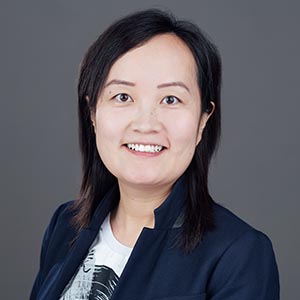
Xialu Liu
Professor[email protected]619-594-1904LH 448E
Request MBA Program Information
Have questions? Request information and connect with our team.

Get In Touch
Follow our Social Media @SDSUFowler
Take the Next Step
Ready to jumpstart your career? Apply now! Or, if you have any questions about the program, contact us via the Request Info button.