Management Professor Seeks to Unravel the Mystery of Workplace Behavior
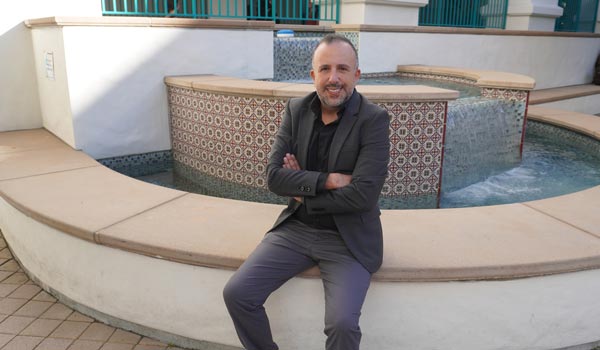
“I didn’t start out with the goal of working in academia,” said Gabi Eissa, an associate professor of management at SDSU’s Fowler College of Business. “I began my career primarily in consulting and training roles, where I enjoyed helping organizations improve how they functioned.”
But for Eissa, his career gave him more questions than answers.
 Open the image full screen.
After observing firsthand how leadership behavior affected workplace environments, Eissa became increasingly interested in understanding why people behave the way they do on the job. This curiosity led him back to school to earn a Ph.D. in management and organizational behavior from Oklahoma State University, allowing him to make a career of answering those questions.
Nearly everyone who works in an organization has had both positive and negative work experiences, but as an academic researcher, Eissa seeks to understand the root causes of these experiences. That research lens carries directly into how he prepares students for the realities of modern organizations. Rather than treating management concepts as abstract theories, he uses his research to help students recognize and navigate the organizational structures and performance expectations they will encounter early in their careers.
“One of the key takeaways from my research is that harmful workplace behavior is often not the result of ‘bad apples,’ but of everyday interactions, incentives, and norms that push people to justify their behaviors,” said Eissa. “For example, when ‘the bottom line’ becomes the sole priority for organizations, ethical boundaries can erode and lead to toxic work environments. On the other hand, managers who value fairness and ethical conduct tend to foster environments where employees feel respected and valued.”
Eissa says his goal is not only to help students succeed professionally, but to help them understand how their own choices can either reinforce or challenge harmful norms once they enter the workforce. He says that many students enter his classroom thinking that good organizational behavior is just “common sense.”
“Then they realize that workplaces are shaped by structure, power dynamics and leadership behavior, and what they thought was ‘common sense’ doesn’t always hold up,” he noted. “Those are moments when the classroom lessons start to click, and students start seeing their workplaces and lives differently. As a professor, those moments are incredibly rewarding.”